
Open vs Enclosed Car Shipping: Which One Do You Need?
4 min read
Open transport
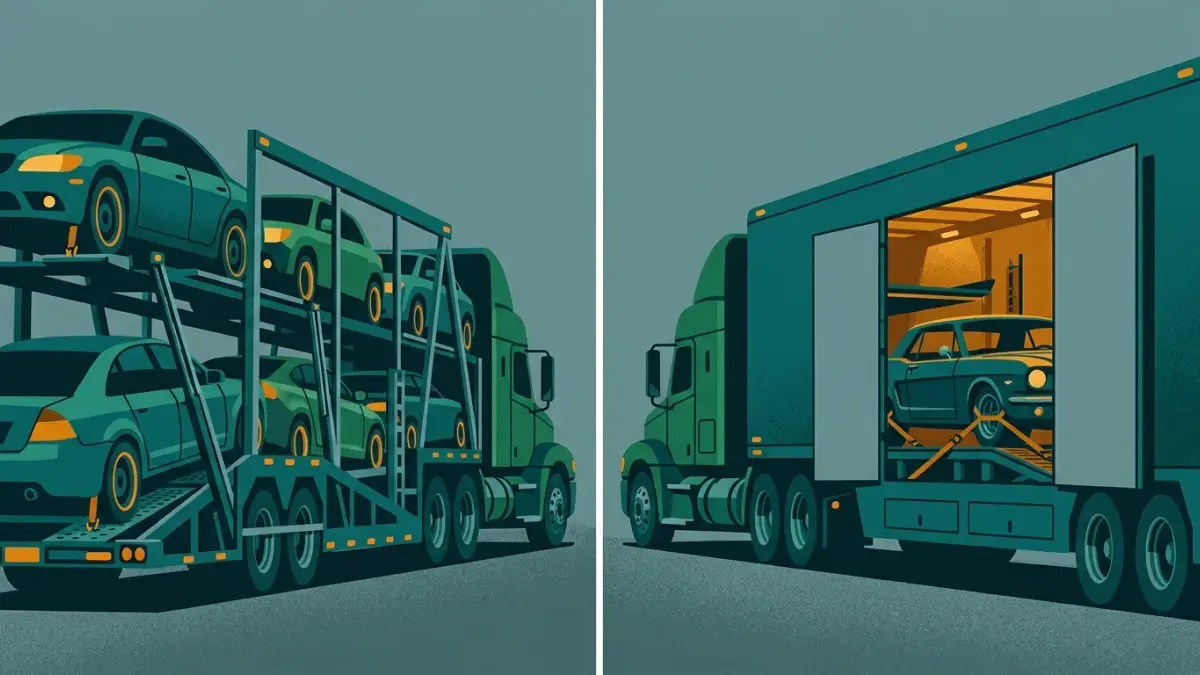
Open carriers are the familiar multi-level trailers you see on highways, usually carrying several cars. They're the most common and most widely available option, which makes scheduling easier and prices lower.
Enclosed transport
Enclosed trailers fully cover your car, protecting it from weather, dust and road debris. Many enclosed carriers carry fewer cars and may offer liftgates for low-clearance vehicles. They're often chosen for classic, luxury, exotic or show cars.
Side-by-side
| Open | Enclosed | |
|---|---|---|
| Availability | High — most trucks are open | Lower — fewer trucks |
| Protection | Exposed to weather and road dust | Covered from weather and debris |
| Cost | Lower | Higher |
| Best for | Everyday cars, dealer moves | High-value, classic, exotic, low-clearance |
Which do you need?
For most daily drivers, open transport is the practical choice. Consider enclosed if your car's value or condition makes exposure a real concern — and confirm the carrier's cargo insurance covers your car's full value either way. Whichever you choose, check the company first.
Check a Company Now
Look up any MC or USDOT number to see authority, bond, revocations and red flags.
Check an MC NumberFrequently Asked Questions
Is open car shipping safe?
Yes — most cars, including new cars from dealerships, are shipped on open carriers. Your car is exposed to weather and road dust, similar to driving it.
Is enclosed shipping worth it?
It can be for high-value, classic, exotic or low-clearance cars, or when you want maximum protection from weather and debris. It typically costs more and has fewer available trucks.
Does enclosed shipping take longer?
It can, because there are fewer enclosed trucks, so finding one on your route may take longer. Ask for the expected pickup window when you book.
Related Guides
- How Much Does It Cost to Ship a Car? (2026 Price Ranges)
- Car Shipping Scams: 9 Red Flags and How to Avoid Them
- Auto Transport Broker vs Carrier: Which Should You Use?
This guide is general information, not legal advice. Always confirm a company's status with FMCSA before doing business.